Column · @johnathanxofs373
Event Wall Surfaces: Recognizing Their Legal Definition Us Lawful Types
·Filed by @johnathanxofs373
When And Why You Need A 'Celebration Wall Contract' With Your Neighbors Frequently, the original proprietor or developer of a residential or commercial property will establish an event wall arrangement prior to offering the home's individual units to brand-new owners. In such situations, the event wall arrangement is also often submitted in the residential or commercial property documents prior to any kind of sales, to ensure that the agreement runs with the land and is binding on all future owners of the specific devices. Various other times however, current system owners can participate in a brand-new party wall surface arrangement, or modify an existing event wall surface agreement. A Celebration Wall surface Contract, often referred to as a Shared Facilities Agreement or Common Wall Surface Agreement, is a legally binding contract between property owners that share an architectural aspect. Its function is to stop disputes by plainly defining each proprietor's legal rights and obligations related to the common structure. If your neighbor can't manage timely repairs or maintenance, it can lead to additional damage and escalate expenses for everyone involved.
- Just like any kind of residential property had by more than one person, things can get odd quickly if you have a dispute about how to utilize that building.
- Initially, the arrangement ought to clearly define what components are shared, typically referred to as the common aspects.
- This can be especially frustrating if your neighbor has various way of living routines or sound levels.
- Also the best neighbors might at some point differ, especially when determining whether to replace a roofing or exactly how to translate upkeep commitments.
- It is a fundamental paper that safeguards both celebrations and fosters a participating environment for shared building possession.
Exactly how essential is a party wall arrangement?
Yes, an event wall contract is required for an extension if it includes work on or near a shared wall with an adjoining home. This contract makes certain the security of both parties and prevents potential disputes.
Every Little Thing You Require To Learn About Purchasing Residences Of Non-standard Construction
In cases where utilities are shared, the arrangement ought to lay out a reasonable technique of separating those costs. First, the arrangement needs to plainly define what components are shared, typically referred to as the common components. These typically consist of shared wall surfaces and roofings, yet might also include garages, driveways, sidewalks, and utility lines. By plainly determining what is shared, the contract gets rid of complication and lowers the opportunity of problem.Participating In A Commercial Lease: What To Recognize When Renting Commercial Building
If you are intending building work with your home that could impact your neighbors you could need a Celebration wall inspection expert Wall surface arrangement. In other words, the goal of a Party Wall Contract is to expect and solve disagreements between events prior to they ever occur. If you stay in a home controlled by a property owners association (HOA) or other entity, it's likely that Party Wall Agreements are baked into the HOA policies, so it's worth examining before deciding to try and exercise your own. Even if your wall is not architectural, it may serve as a fire or . Lawsuits regarding celebration walls return to a minimum of 1813 and a decision of the English Court of Typical Appeals in Matts v. Hawkins, 5 Taunton 20 (1813 ). Ten years before the disagreement got to court, Hawkins demolished his building, leaving the party wall surface standing. Later Matts, whose structure still stood, began to expand the celebration wall upward to sustain a floor that Matts was including in his building. When Matts began to rebuild it, Hawkins tore it down again, and Matts sued Hawkins for trespass. Among the standout pros of a shared or dividing wall is the cost-sharing element. When maintenance or repair services are needed, you and your neighbor can divide the expenses, decreasing your monetary burden. This cost-sharing is typically guided by a written celebration wall agreement, which details each party's duties and aids avoid disagreements. An event wall surface award is a vital consideration for property owners starting remodellings or construction Visit website tasks that have the possible to affect an adjoining residential or commercial property. This overview looks into the basics of party wall surface awards, covering the lawful framework, processes, and regularly asked concerns to give an extensive understanding for any individual involved in such jobs. A retrospective event wall surface award is an arrangement that formalises the conditions of event wall surface works after they have actually been completed. Additionally, an Event Wall Surface Award (a legally binding contract made in between both celebrations) can be prepared by a party wall surveyor (or an "Agreed Surveyor"). Event wall surface contracts frequently include details on how prices for maintenance or repair services are shared. Since both properties benefit from the shared wall, both proprietors have to contribute to its upkeep. 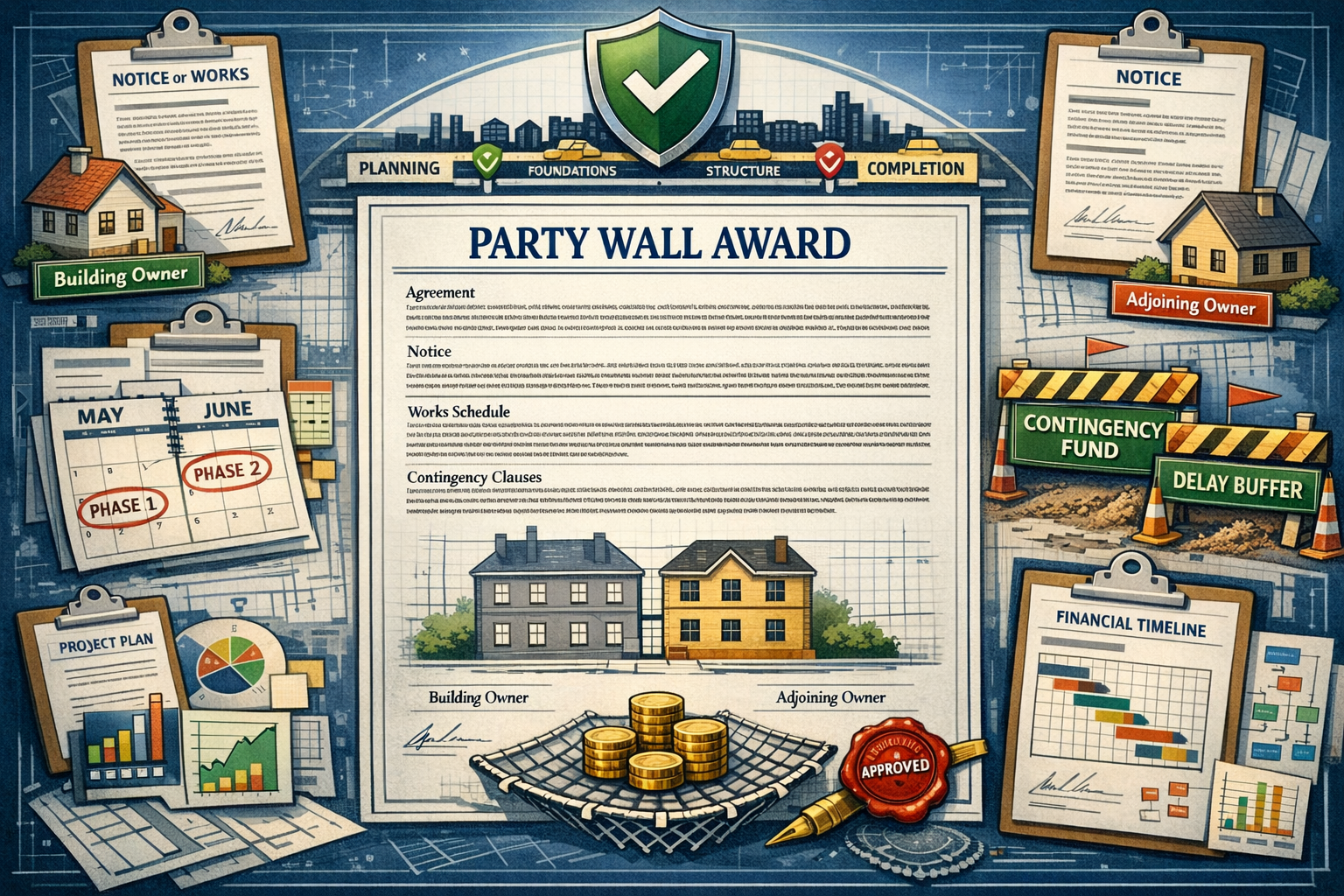

— 30 —